
22
Oct
Root canal treatment is an endodontic procedure that entails the physical removal of inflamed, infected, or necrotic dental pulp tissue from the inner chamber and root canals, thorough disinfection, shaping, and hermetic sealing of the root canals to restore long-term oral health. Clinical guidelines from the American Association of Endodontists (AAE) indicate that today's endodontic therapy, using the latest rotary instrumentation and biocompatible materials, can achieve success rates exceeding 95%.
Decay that affects the deeper layers of tooth structure, or trauma to a tooth, can make endodontic therapy the better option to keep your tooth in place, prevent adjacent teeth from shifting, and maintain your tooth's structural integrity for a pain-free smile that is biologically and economically valuable. Let us look in detail at the benefits you can enjoy from root canal treatment.
Relieves Severe Pain and Discomfort
With severe decay or a physical crack in the outer layer of tooth enamel, bacteria invade the protective layers and get into the interior dental pulp of your tooth. It is a very sensitive tissue that has blood vessels, connective tissue, and sensory nerve endings. When bacteria slip past a crack or decay, they infect the living tissue inside your tooth. Because of the inner chamber, they infect the living tissue inside your tooth. Because that inner chamber has hard walls, the infection causes painful swelling that presses right on your nerves.
As the pulp expands, it has no way to grow outward except by increasing pressure on the nerves, which causes severe, pulsing toothaches that can be worsened by hot or cold foods and by biting down. Chemical mediators, like prostaglandins, flood the affected area, making the nerve fibers so sensitive that they cause intense and long-lasting pain even to light rubbing.
Your dentist will use diagnostic tools before you start treatment to identify where the pain is coming from. These tools include digital pulp vitality tests and thermal assessments. By precisely identifying this diagnostic phase, only the affected tooth is treated. There is no guesswork involved, and targeted treatment will end the pain quickly. The endodontist can relieve this discomfort by:
-
Carefully assessing the pulp chamber
-
Cleaning out the dead nerve tissue
-
Unclogging the pressure within the tooth
Your dentists will use anesthesia during the process. Modern dental anesthesia is designed to provide a high level of comfort during the process and help you feel minimal to no discomfort before work begins.
Furthermore, dentists use advanced nickel-titanium (NiTi) rotary instruments and ultrasonic irrigation systems recommended by modern dental guidelines. They navigate the intricate root canals quickly and quietly, resulting in shorter appointments and a more thorough clean. When the infected pulp is removed and the canal system is cleaned and treated, the painful sensation goes away.
You no longer have to take painkillers that only offer temporary relief or painfully sleep through the night with no relief in sight. Once your comfort is restored, you can resume your normal activities, get a good night's sleep, and eat without fear of sharp shooting pain spreading through your jaw.
Retains the Natural Form of the Tooth
Once a tooth is missing, a series of structural changes occurs throughout the dental arch. Once a tooth is extracted, there are no more anchors to support the remaining teeth. Thus, the remaining teeth are left susceptible to movement. The neighboring teeth will tend to move into the space with time due to the absence of lateral support. This movement can affect your occlusion, causing uneven pressure on your teeth, which can cause premature wear, jaw muscle fatigue, and temporomandibular joint disorders. Moreover, opposing teeth can supererupt, drifting upward or downward, simply because they lack a natural opposing surface.
Having a root canal preserves the structure of your natural tooth, providing a firm grip in the jawbone, compared with extraction. Saving your natural tooth will help you retain the same spacing, contact, and alignment of the entire dental arch. When you chew, your teeth work in harmony, distributing bite power evenly across your jaw. Your molars take the brunt of your daily chewing pressure, and maintaining a natural molar helps prevent a cascade collapse in your posterior bite.
Moreover, retaining your natural tooth will maintain the periodontal ligament. This is a unique group of collagen fibers that connect the tooth root to the bone socket. This ligament gives you a natural sense of proprioception so that your brain can accurately feel and adjust the pressure you can apply when you bite down. Research published by the American Association of Endodontists (AAE) notes that artificial replacements, like dental implants, lack this specialized ligament feedback loop and instead osseointegrate directly with the bone.
The preservation of your natural tooth allows you to maintain your natural sensory experience, structural stability, and long-term functional harmony, while avoiding much future need for rehabilitative dentistry.
Avoids the Spread of Infection
A dental infection will not stay contained within one tooth. As the bacteria proliferate in the necrotic pulp chamber, they will eventually penetrate the small opening at the apex of the root (apical foramen) and enter the surrounding periapical tissues. This can eventually cause a painful dental abscess, which is a pocket of pus that develops in the gums, often causing swelling in the face and gums and destruction of the tooth's alveolar bone. In more complicated cases, bacteria can spread into the neck, sinus cavity, or bloodstream, leading to significant systemic health issues. Systemic inflammatory burdens from chronic oral infections have been linked in various clinical studies to broader health complications, making prompt local intervention critical.
This harmful cycle of infection can be stopped with root canal treatment, which thoroughly cleans the entire root canal system. Human tooth anatomy can be quite complex, with branching, microlateral canals, and accessory pathways that can harbor bacteria. Your dentist will place a thin rubber sheet called a rubber dam over the tooth during the procedure. This clinical protection ensures that the area is always dry, prevents saliva from entering the sterile canals, and prevents you from swallowing any small instruments. To overcome anatomical complexities, your dentist uses 3D imaging and advanced cleaning tools to flush away every last bit of bacteria. This removes all bacterial colonies, endotoxins, and decaying organic debris from all corners of the internal anatomy.
The canals are then thoroughly sanitized. Advanced bioceramic root canal sealers are used, along with warm vertical compaction techniques, to pack gutta-percha into the canals to achieve a hermetic seal. This seal prevents any further re-entry of bacteria, which helps to keep your periapical tissues, neighboring roots, and jawbone safe from bacterial invasion. When you address the infection at its source, you protect your oral ecosystem and safeguard your systemic well-being.
Cost-Effective Long-Term Solution
When considering dental care options, finances are a major factor. While a root canal with a permanent dental crown might seem like a substantial expense, it is actually very cost-effective compared to other treatment options you would need if you did not have the root canal.
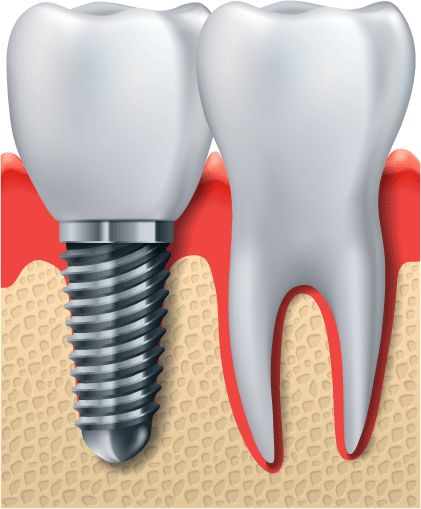
When a tooth is compromised and needs to be extracted, it is essential to replace it to prevent the health, function, and esthetic issues that can arise from an open gap. Treatment options for replacing teeth include a fixed dental bridge or dental implant surgery.
The initial laboratory and surgical expenses are greater with both bridges and implants. They often require additional surgery, for example, bone grafting, sinus lifting, or drastic modification of healthy adjacent teeth as bridge abutments. Moreover, artificial dental replacements are not lifetime investments. Bridges and implants often require adjustments, management of conditions such as peri-implantitis, and eventual repairs or replacements, resulting in ongoing costs.
Furthermore, patients often find that their dental insurance companies offer excellent coverage for endodontic treatment and the placement of restorative crowns. In contrast, dental implants are deemed elective treatments or subject to more restrictive coverage parameters. Conversely, a successfully treated and crowned natural tooth can last for decades, and frequently for the remainder of your life, with standard daily hygiene and routine dental checkups. Investing in a root canal will give you a permanent and structurally sound solution, saving you money and providing high-quality, long-lasting clinical results.
Beyond the direct costs of the procedures, avoiding tooth extraction will save on future costly secondary dental problems. If the gap is not closed, surrounding teeth will migrate into it, changing how your teeth fit together and causing significant malocclusion. These misalignments can be prevented with a simple adjustment; if not, they will require expensive orthodontic treatment or complex occlusal adjustments to correct them and restore normal jaw mechanics. Moreover, bite misalignments can lead to temporomandibular joint (TMJ) disorders, which can cause chronic facial pain and may require special dental splints or therapy. An infected tooth should be treated promptly to prevent a cascade of secondary oral health issues that can be costly and time-consuming.
Restores Normal Chewing and Biting
Eating should be a pleasure, not an uncomfortable ordeal. Sharp sensitivity to temperature changes, lingering aches after consuming sweet or acidic foods, and localized pain under heavy chewing pressure force you to alter your diet. You might end up chewing only on one side of your mouth, not eating foods you enjoy, for example, crisp fruits, vegetables, or meats, or eating quickly to avoid discomfort. This food restriction can affect your health and well-being.
After endodontic treatment, your damaged tooth can be fully restored to its function. After the internal infection has been cleared and the tooth has regained full structural strength and load-bearing capacity with a custom-made permanent crown, it is ready to function as a normal tooth. During the short period between root canal cleaning and the installation of a permanent crown, a temporary restoration protects the tooth. This temporary crown will keep the tooth in place and enable the patient to chew while the custom crown is being made.
The natural mechanics of your jaw depend on the even distribution of the food-processing forces between your molars and your premolars. If a tooth is damaged and left untreated, the bite is disrupted, and the other teeth and the jaw muscles are strained. Root canal-treated teeth withstand heavy vertical and lateral loads of chewing, the same as natural teeth. You can enjoy a wide range of foods without wincing at sudden sensitivity or pain, bite down, chew efficiently, and maintain a balanced, nutritious diet. By restoring masticatory function, your digestive health will improve, nutrients will be more easily absorbed, and you will enjoy your meals happily again.
Protects the Jawbone
The human body works in the function of biological efficiency. Structures that are not used and not stimulated tend to atrophy and resorb. This physiological rule applies directly to the alveolar bone supporting your teeth. Mechanical forces are passed down through the crown and roots of your teeth into the surrounding jawbone when you chew, bite, and swallow. This stimulation encourages specialized cells known as osteoblasts to maintain bone density and mineral content, which helps keep the jaw ridge strong, thick, and supportive.
When you lose a tooth, your jawbone stops getting the natural chewing pressure it needs to stay thick and strong. If the natural root is not present, it is no longer there to serve as an anchor and stress transmitter. The body begins to resorb the alveolar bone, resulting in a localized reduction in bone volume and thinning of the jaw ridge. This loss of bone changes facial contours, shifts the other teeth, and makes future restorative options more difficult.
When a root canal is done, the root of the natural tooth remains in place in the jawbone. While chewing and speaking with the natural tooth, the natural forces continue to pass through the root, maintaining the bone's volume, density, and integrity. This essential bone structure helps keep the face looking fresh and youthful throughout life, rather than appearing older with a hollowed or sagging lower face after tooth loss. Preserving alveolar bone height keeps the face functional and healthy.
Not only will your profile be protected, but so will the natural roots, which will stabilize the surrounding periodontal ligament, the sensitive tissues that serve as an important sensory component during chewing. This delicately designed biomechanical relationship enables you to measure the bite precisely and avoid overloading the teeth.
If this ligament is removed during extraction, the natural tactile feedback is irretrievably lost. A root canal saves your natural tooth structure, maintains your natural system of proprioception, and allows you to feel as though you are chewing normally while avoiding unnatural wear and misalignment of your neighboring teeth, jaw joints, and tissues over time.
Enhances Natural Aesthetics
A full and beautiful smile is important to your self-assurance, your interactions with others, your business life, and your social life. If a front or visible molar or premolar tooth is damaged, discolored due to internal nerve necrosis, or heavily chipped, it can create a sense of insecurity for you. You might find yourself:
-
Covering your mouth when you laugh
-
Speaking in a shaky voice
-
Simply not participating in social events due to noticeable dental issues
It may seem that a broken tooth should be extracted and replaced with an artificial one, but this is not necessarily the ideal solution for the aesthetic concerns in modern restorative dentistry.
A precision-made porcelain or ceramic crown will restore your smile's beauty and health after root canal therapy. Modern dental laboratories can create custom crowns that closely match the shade, translucency, contour, and surface texture of your natural adjacent teeth. Advanced ceramic materials reproduce the light-transmitting and light-reflecting properties of natural tooth enamel. They are highly resistant to discoloration, maintain their shade well over time, and resist fading under everyday lighting.
Furthermore, modern high-grade, stain-resistant ceramics resist staining from coffee, tea, and dark foods, so your restored smile will look bright and shiny for years to come. The crown fuses perfectly with your teeth, so no one will ever be able to tell that you had previous dental procedures. You do not have to deal with displeasing metal clasps or dark gum lines, and no gaps in between teeth are visible. Maintaining your natural tooth contours and enhancing them with aesthetic restorative materials will help to keep your smile bright, balanced, and radiant.
Beyond the visual change, the underlying bone structure of the natural tooth root remains intact, preserving the natural tooth. With a missing tooth, the surrounding bone recedes over time, causing changes in the bite and facial sagging. Root canal therapy preserves the bone density of your jaw, helps retain youthful facial features, and helps prevent adjacent teeth from shifting. This holistic approach is designed to maintain the mouth's structural integrity while delivering beautiful, lasting aesthetic results. In the end, you will be able to smile, talk, and laugh without reservation with the confidence that your smile and oral health are fully protected.
Find a Professional Dentist Near Me
Root canal treatment can save a tooth from complicated extractions and replacements while also preventing bone loss and eliminating painful bacterial infections. Delaying care will allow decay to progress, potentially leading to serious abscesses and structural damage. If a tooth remains painful or sensitive after a few days, you should make an appointment to have it evaluated.
At The Whittier Dentist, we use state-of-the-art technology and methods to provide gentle, accurate treatment that best suits your needs. The first step in restoring your smile is to seek a professional diagnosis. Do not let dental anxiety get in the way of good oral health. Call our team today at 562-632-1223 to schedule a consultation and begin enjoying a healthy smile and comfort forever.


